Inclusion in Action: Practical Ways Schools Can Walk the Talk

Inclusion isn’t a document on the shelf, it’s lived daily in classrooms, assemblies, playgrounds, and sports fields. True inclusion means every student belongs, participates, and is celebrated for who they are.
Policies and strategies matter, but the heart of inclusion is visible in the everyday culture of a school. So how can schools move beyond words to show real inclusion? Here are some practical ways.
1. Host Inclusive Events & Celebrations
Events and special days should reflect the diversity of your student community and ensure all students can participate.
Ideas include:
Inclusive Sports Carnival: Provide multi-sensory stations, walking races, quiet zones, and adaptive equipment so that every student is involved.
Harmony Day or NAIDOC Week: Celebrate cultures and backgrounds inclusively, highlighting the voices of students with disabilities, neurodiverse learners, and those with diverse communication needs.
Wellbeing Week: Invite speakers with lived experience of disability and explore communication methods such as AUSLAN or AAC.
2. Design Accessible Environments
Physical spaces must demonstrate a commitment to inclusion, not just compliance.
Check your:
Playgrounds: Do they have accessible pathways, sensory areas, quiet corners, and shaded spaces?
Classroom layouts: Can students who use mobility aids or who have sensory needs move safely and comfortably?
Technology: Is assistive technology available, and are staff trained to support tools like AAC devices, text-to-speech, or adapted keyboards?
3. Support Participation in School Life
Every student should be welcomed and supported to join in all aspects of school life.
This could mean:
Making excursions accessible.
Providing ways to participate in school productions, onstage or backstage.
Ensuring leadership groups (e.g., student council) are open to all.
Adjusting activities so that students can attend camps and overnight stays.
4. Communicate Inclusively
The way a school shares messages speaks volumes about its values.
Inclusion in assemblies and communication can look like:
Using visual schedules or captioned videos.
Allowing presentations through speech, AAC devices, or pre-recorded video.
Recognising achievements beyond academics and sport, such as kindness, growth, or resilience.
5. Diversity Curriculum & Resources
Representation matters. Students should see themselves in the stories, history, and learning experiences of their school.
Steps you can take:
Ensure the library includes books featuring characters with disabilities, diverse cultures, and multiple neurotypes.
Use teaching resources that highlight different communication styles and learning approaches.
6. Foster an Inclusive Culture
Culture is what happens when no one is watching. A truly inclusive school values diversity as a strength.
Ways to build this culture:
Use inclusive language in newsletters, signage, assemblies, and lessons.
Create advisory groups that include students with disabilities or diverse needs.
Provide ongoing professional development in Universal Design for Learning (UDL), trauma-informed practice, and disability awareness.
Final Thought
Inclusion is about more than access - it’s about belonging. When inclusion is visible in events, embedded in routines, and woven into school culture, it sends a powerful message:
“You belong here. You matter.”
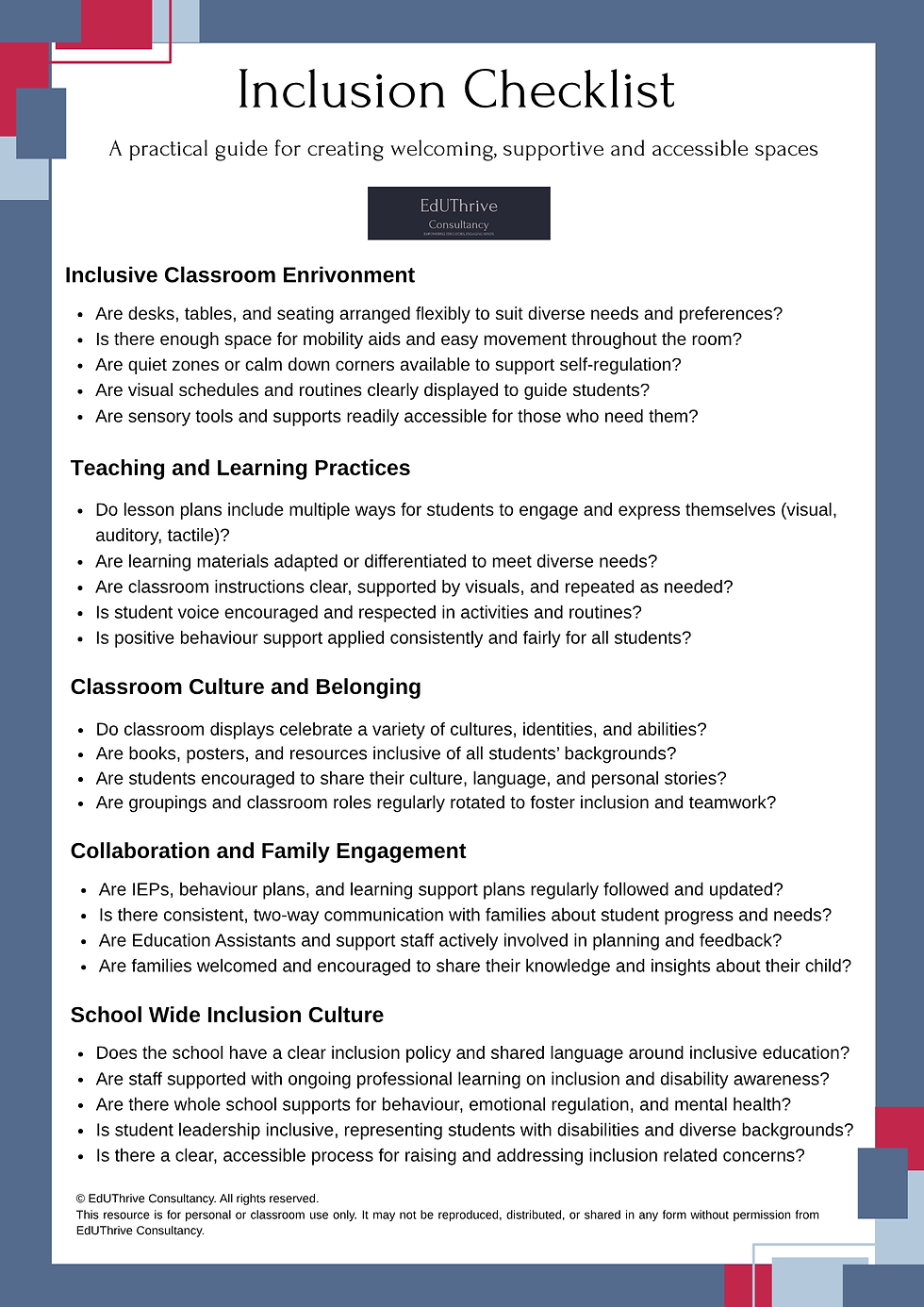
EdUThrive Inclusive Checklist
Inclusion starts with everyday choices. Use our free EdUThrive Inclusive Checklist to see where your school is thriving - and where it can grow.


Comments